
Interview: Jacob Rees-Mogg
Empire, Internationalism, and the Future of British Power

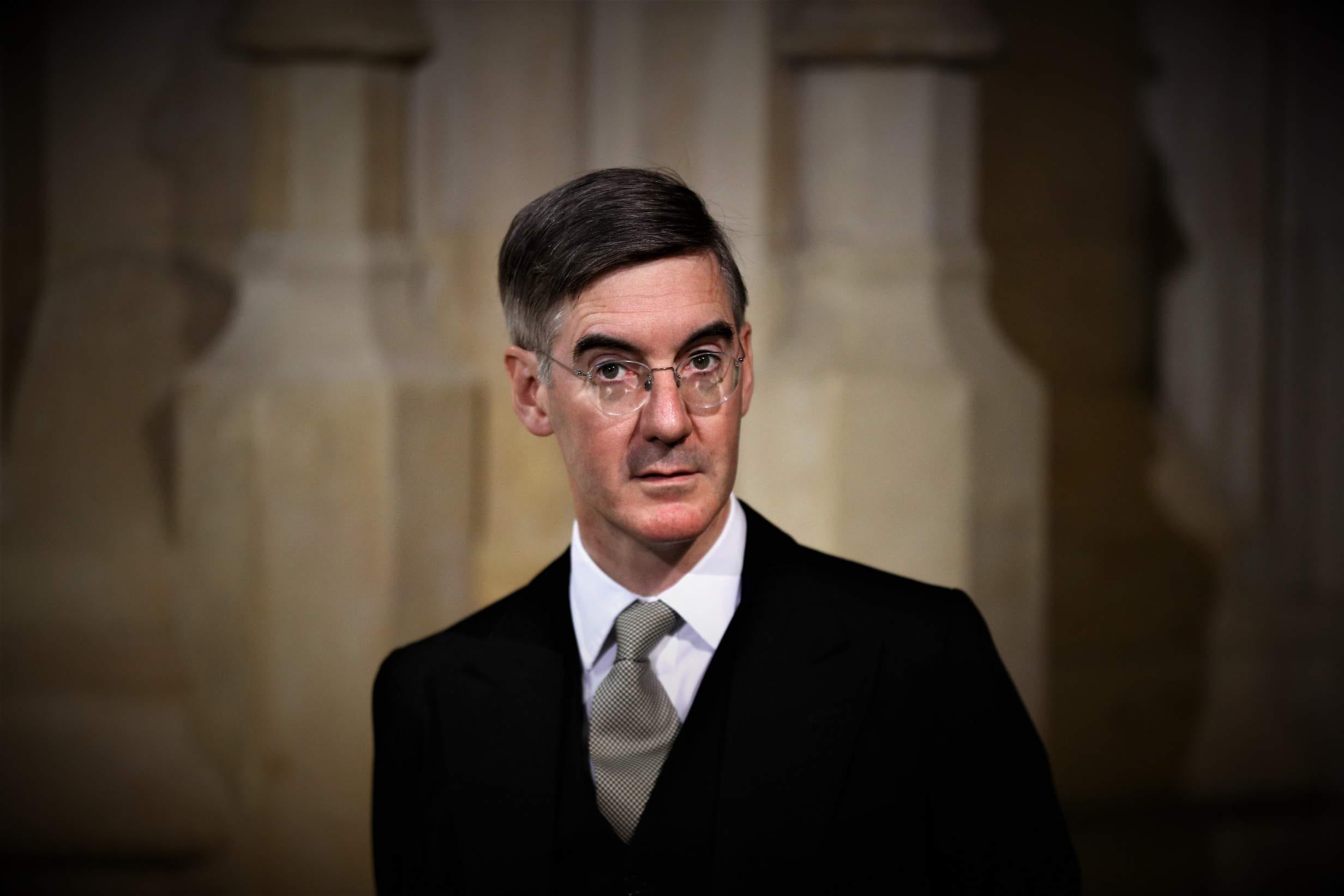
Sir Jacob Rees-Mogg is a British politician and businessman. He served as a Member of Parliament from 2010 to 2024 and has held senior roles including Leader of the House of Commons and Secretary of State for Business, Energy and Industrial Strategy.
What follows is a transcript of our conversation, which took place on February 19, 2025. The transcript has been edited for length and clarity.
[Note: The opinions expressed by the interviewee are their own and do not necessarily represent those of the interviewer.]
The Decline of British Power
CB: When did Britain’s decline begin, and what’s the truth behind this sentiment?
JRM: There’s been a very long period when people have been talking about the decline of Britain, at least from the late 19th century. And it becomes a comparative discussion. The UK is the predominant economy, the first to go through the Industrial Revolution, and then others catch up. The US and Germany both have strong economic growth in the late 19th century, and the UK is beginning to feel it’s not as predominant as it was—though at that point the Empire is still expanding.
Interestingly, the size of the Empire is at its largest after our power has peaked. Then we have the First World War, and we’re basically bankrupted. We’re not quite, and we do manage our debts, but the amount of money that that takes is enormous, and that has a long-standing effect, because you have high taxation to pay the debt, you have a lack of investment because the money is going to taxation, and was previously going to armaments. So you have an economy that isn’t keeping up as others are growing. The US, which is late to the First World War, provides a lot of armaments, makes a lot of money out of it, and becomes much stronger.
You then get the Second World War and have the same thing again. After the Second World War, the UK really has no money at all. The Empire ends, India goes, and you have steady economic decline, really, until Margaret Thatcher becomes prime minister. We have a socialist government immediately after the war, and they think that the state controlling things worked in the war, and therefore it will work in peacetime. There were extraordinary levels of detailed governmental control. Up to 1979, the price of a pint of milk is set by the government. That level of detailed control is something you never had in the United States, and that has economic consequences.
Margaret Thatcher then comes along and changes it all. There’s a fundamental renaissance in the economy. Britain gets richer for the next 20 years. By 2000, GDP per capita in the UK is 90 percent of GDP per capita in the US. You then have left wing government, and from 2000 to now, we’ve gone down to 60 percent of GDP per capita of the US, partly as a consequence of mass migration, which has increased GDP but reduced it per capita, and partly because we were in the European Union and became part of a very heavily regulated welfare state.
Angela Merkel said this when she pointed out that Europe’s percentage of global welfare spending was a multiple of its share of the global economy. One of the reasons I was so critical of the EU was that it was about protecting incumbents, which always leads to economic stultification, because when you get rid of competition and you have protectionism to keep people out, you don’t have the creative destruction that you need to make economies work. Most EU protectionism is barriers to trade rather than strict tariffs.
During this time the UK becomes very dependent on financial services. You then have the crash in 2008, leaving a big hole in the UK’s economic model. Since then, the underlying economics have been weaker, and ultimately, global influence is dependent on your economic clout. Can you afford to send troops? Do you have an army, a navy, and an air force that can do things? What was the great success of the British from the 17th century onwards? It was the Royal Navy. The line that we picked up an empire in a fit of absent mindedness has an element of truth in it. In some of these places we had just a coaling station so that we could fuel our ships once we moved from wooden to metal ships in the middle of the 19th century.
The projection of power is fundamentally dependent on your economic success. Now, in terms of projection of power, we have got in a frightful muddle. We became internationalist: the European Union, the European Court of Human Rights, the International Court of Justice, the International Criminal Court. We sign up to all this nonsense, and the US doesn’t. Once you’ve signed up to it, your ability to act independently is significantly reduced. How do you vote to change international law?
CB: Right, because who’s ultimately accountable?
JRM: Allowing international bodies to rule on our affairs is crazy, and it weakens us, and it makes other countries not take us seriously, because why should they listen to the UK when we’re getting told what to do by some random bureaucratic body over which we have remarkably little influence, which we are extraordinarily bad at using.
So partly it’s economic weakness. Partly it is ideological. These institutions have been in the hands of the left, and the Conservatives, when they’ve been in office, haven’t ratcheted them back, other than Brexit. Brexit is really important, actually, and that has weakened our position over an extended period. Now it’s very unlucky we’ve got such a bad government at the moment. It’s a much worse government than I anticipated, which will not use any of Britain’s influence at all. But Brexit made Ukraine possible.
To go back to our prior conversation on those first two weeks of the war, how did Zelensky survive the first two weeks? He had Javelins, and it was the UK who got them to Ukraine, against opposition. When we were delivering them, we did not fly them over German airspace because we thought that if we asked permission, it would be refused. It would be wrong to say the Germans refused permission, but it was thought so unlikely permission would be given that we didn’t even bother asking.
In the European Union, foreign policy is a matter of unanimity, but you are bound by the concept of sincere cooperation. It is, to my mind, inconceivable that a member state of the European Union could have delivered Javelin missiles to Ukraine without the agreement of the rest of the European Union. It would not have been sincere cooperation. And Boris Johnson does this against official advice in the UK, against the views of allies. He does it because he thinks it’s the right thing to do.
That’s an example of how Brexit allows us to restore our international reputation and reach—if we’re willing to use it, and we have a prime minister who’s willing to use it. AUKUS is exactly the same thing. We absolutely couldn’t have done AUKUS in the European Union on the exact same basis. Remember, the French were furious. They were so cross they withdrew their ambassadors from both the US and Australia. For an ally, you know as well as I do, that’s an extraordinary diplomatic statement to make. It gives you an idea that this wasn’t viewed by them as sincere cooperation.
CB: I’m sure they would have vetoed it somehow.
JRM: I don’t think it would even have arisen, because the Foreign Office mandarins would have said to Boris and to the Foreign Secretary, “you can’t do this under EU law.” It would be a breach of the EU treaties, at which point it is very difficult for ministers to override that. I think it wouldn’t have even got to the point of being vetoed. And that’s important because a British government can use its influence—if it wants to. And AUKUS is a statement that we are interested beyond the narrow European sphere. We’re interested globally. But this is not going to happen with a government made up of international lawyers. That’s not how they see the world.
They want the world to be run by clever, cosmopolitan people who look down on voters. That’s how they’ve tried to set things up. An incoming Conservative government, or right wing government, in case it’s Reform, must smash all this. We should leave the International Criminal Court, we should pull out of these bodies that try to impose a view of the world that I don’t have, and most British people don’t have. America wisely has never got involved with it, so clearly it doesn’t have this view either. The basic purpose is to tie down Goliath. That’s what it’s all about. It’s about states and places that don’t really matter trying to tie down the ones that do, and we should just break free.
The Price of Victory
CB: From when Germany starts to build a fleet in the late Victorian era to the end of the Second World War—1898 to 1945—there is fierce Anglo-German competition, but Britain does not emerge more powerful from it. Do you think there was any way in which Anglo-German interests might rather have converged during that period?
JRM: It’s a really difficult question of history. What you’re really asking is, was the First World War a war that we needed to fight, and what would the consequences have been if we hadn’t. The sheer ignorance of the British state in 1914 is extraordinary. You’ve got Gray, who his whole time as Foreign Secretary never goes abroad. You’ve got the cabinet discussing Ireland. Their main concern is the “mutiny at the Curragh,” and what to do about the Irish question. You’ve got votes for women at the forefront of their minds, with the suffragettes throwing bricks through windows, and all those sorts of things going on. They’re not thinking about international affairs at all.
Things moved so quickly. Even after the Habsburg Crown Prince is shot, the cabinet isn’t discussing continental affairs. It’s only really once Belgium is invaded, and at that point, only one member of the cabinet resigns, if I remember rightly, and they all think it’s the right thing to do. They think that Germany has to be stopped.
The simple answer is that invading Belgium was a breach of the treaties, and we had to stick to our treaties, because that was how the whole system had worked. And bear in mind, the system worked very well. The Congress of Vienna was amazingly successful. You basically have 100 years of European peace. You might not think that if you lived in Paris in 1871, but you broadly have 100 years of European peace, the longest period of peace that Europe has ever managed. And that’s very remarkable. So they think that peace depends on the guarantees, and they think it will be a short war. Of course, it isn’t. Like Ukraine. The Kaiser thought it would be a short war with “the contemptible little army,” as he referred to the British Army that was sent over.
What would have happened had we done nothing? France would have been defeated. What are the consequences of that? Does Germany then have a very, very powerful continental base? Having succeeded, would it try it again? I’m not sure I have a good answer for you, because I don’t think standing aside was without risks. But what wouldn’t have happened? There might not have been a Russian revolution if we hadn’t got involved. Probably there would have been though, wouldn’t there? Because Russia is very unstable at that point. And they keep on having problems with their Tsars being assassinated. It’s not a nice, stable Russia that suddenly the First World War makes unstable. It’s a very unstable Russia that the First World War tips over.
Would our empire have survived? Well, I don’t think it would, because we never really kept our empire by force. We won it by force, but if you look at the Indian empire, we’re winning it by force because we’re on the side of Prince A against Prince B, and we govern with a remarkably light touch. We were not an occupying force in the way that the Germans were in France in the 1940s.
CB: Something like 1,200 bureaucrats in charge of a quarter of the world’s population. The modern British state could learn from this perhaps.
JRM: I was, for a time, Minister for Government Efficiency, and a civil servant came in to see me because we were going to have cuts, and he said that the aim was to get back to the 1920 level of staffing. And I said, “That’s brilliant. How are we going to do that?” Unfortunately, he meant 2019–2020 level of staff, not 1920. Though I’m afraid I knew what he meant.
American Financial Dominance
CB: Something interesting happened to Britain during the First World War. It begins to cede its power to the United States. Perhaps this doesn’t become fully obvious until 1956. But the state becomes reliant on American bondholders, on JP Morgan, to sustain the war effort. Was there a point at which Britain should have cut their losses?
JRM: No, it’s one of those things that once you’re in, you have to finish. You can’t give up halfway. You have to fight it to the bitter end. And that was right. And actually, I turn it round, see, I think the success of Britain in the 18th century is that we have a system for financing the government in times of war that spreads the cost over times of peace, and that we’ve got very used to that. And if you look at UK interest rates against French interest rates in the 18th century, it is much cheaper to borrow in the UK because gilt-edged securities are always repaid.
When you build up a reputation for paying it back, and even if it looks as if we’re going to lose the Napoleonic Wars, the interest rate on UK gilts is still affordable, whereas the interest rates the French kings are paying, partly because they simply don’t know what their financial position is, they don’t have very good figures on income and expenditure, the interest they’re paying is usurious. So France loses, because it cannot finance stuff. And there’s an interesting theory that setting up the Bank of England leads to the creation of the British Empire, because it makes the financing of it possible. When you look at the First World War, this is exactly the same thing that we had been doing.
As I said, I did emerging markets. If you look at what people were buying in 1890 and what they were buying in 2000, they were still buying Argentina, they were buying Russia, and they were buying China. And UK portfolios were much more internationally diversified before 1914 than they were until the 1990s. That system of global finance gave us access to capital. And some of what’s done with the American government during the First World War is done at a government level, and the US government is supportive without wanting to get involved in war. But a lot of Americans want to buy UK bonds because they think they’ll be repaid at face value. They think that they are a reasonable risk to take, whilst they end up papering their walls with very elegantly engraved Russian bonds. And so I think that’s just the way the system works.
And in 1956 did Eisenhower call our bluff, or did he himself bluff? Suez was a stupid thing to do, and therefore, getting out of it was probably the right thing. But Churchill’s comment at the time was that “I don’t think I’d have started, but if I’d started, I would not have stopped.”
Did Britain Win the Second World War?
CB: The Second World War begins for Britain when you honor your commitment to Poland on September 3, 1939. One outcome of the war was the loss of Polish sovereignty, along with the loss of Empire. Did Britain really win in the end?
JRM: Well, it was very expensive. It’s not a question of whether we lost or not. It’s a question of whether it was a Pyrrhic victory, clearly.
CB: British troops in Hamburg is victory.
JRM: Yes. But was it a Pyrrhic victory, or did it accelerate things that were happening anyway? I think the UK would have got a Labour government. The 1935 result is an absolute outlier. Say there’s no war. You get a Labour government. The Labour government wants to get rid of India anyway. It wanted to set up a socialist state and would have gone ahead with that. We would have had more money, certainly. The war was extremely expensive.
You see, I think the thing about having no money was that it made the retreat from Empire very easy, whereas if we’d had the money, we might have tried to keep it by force, which would have been disastrous. It wouldn’t have succeeded, and we would have left having spent a lot of money trying to defend something that we couldn’t afford to keep anyway, and we’d have damaged our reputation. Very few imperial powers leave their empires in as elegant a way as we did. And I think that ended up, accidentally rather than by design, being beneficial.
What is the greatest, strongest son of empire? The United States, clearly. And so, if you take the Anglo-Saxon sphere as a whole, where has all this gone? If you go back, which I love doing, to Alfred the Great and Wessex, what comes out of Wessex, this sort of great oak tree that then has its branches, then the main trunk is obviously England, and you get the United Kingdom. But from this great trunk, you get America, Australia, New Zealand, Canada, India. Very successful nations that came from a constitutional system that owes its origins to Alfred the Great defeating the Danes in 878. And you’ll accuse me of being simplistic and Whiggish and all sorts of things. But actually, if you take the broader picture, and the success of the United States, and the defeat of a great evil, and ultimately the defeat of communism too, all of those required the UK to go to war in 1939.
Finance vs Industry
CB: Under Thatcher you see the decline of labor power and the rise of financial power, and what is Britain today if not a financial economy? Has this been good for the country?
JRM: Look, we have willfully destroyed our non-finance economy, and we’re about to destroy our finance economy too, by completely crazy regulation, primarily green regulation. Our electricity price is four times those in the US for industrial electricity, our steel industry is closing, we’re telling our car manufacturers they’ve all got to produce electric cars in five years. Bonkers. So why will it affect finance? Well, because AI is going to become increasingly important in finance, and AI now needs a lot of electricity.
All economies succeed on the basis of cheap energy. And we have decided as a matter of policy to have extraordinarily expensive energy in the last 20 years since the Climate Change Act was passed. This is really very, very stupid, and it needs to be reversed. If some genius invents some solar panel that produces cheap energy in unlimited quantities, I’m all for being green, but I’m not in favor of being uncompetitive. If Trump had not abandoned this course, India and China would both have got much richer than the US, because they were never going to do it until they got rich. And this is so important about Trump, because to get back to the very beginning of our conversation, the fundamental of your global reach is your economic strength. And if you are a strong economy, you will have global reach. If you’re not, your soft power doesn’t go very far. People like to come for a state visit, but they don’t change their mind on anything having ridden in a carriage. Bear in mind, both Putin and Xi have been on state visits.
CB: Was Trump denied one during his first term?
JRM: Quite disgracefully, yes. But they wouldn’t let Reagan speak in Westminster Hall either. He spoke in the Royal Gallery. He was very controversial at the time, in a not entirely dissimilar way to Trump.
Reforming the British State
CB: How do you solve the problem of the apparatchik class within the British state? You were in the Cabinet, you had to deal with a powerful bureaucracy. Perhaps in relative terms it’s even more powerful than the American bureaucracy.
JRM: The advantage the British prime minister has is he commands a majority in parliament and can get any legislation through that he wants, in theory. What has given the apparatchiks power is laws passed by Parliament. What are these laws? There’s the Human Rights Act, which is a disaster and should go. It’s politicizing our judiciary, and it’s leading to really eccentric decisions about who can stay in this country. The Climate Change Act needs to go, the Equality Act needs to go. The Supreme Court ought to be put back into the House of Lords.
You see, we don’t have a separation of powers in this country. We have the King in Parliament, and in Parliament is the legislature, the executive, and the judiciary, and we need to get back to that system because it actually works. And that’s what the sovereignty of Parliament means. It’s all of it coming together, the ultimate sovereignty of Parliament. So you need a restoration, as in 1660, to put the constitution back to where it was, pre Blair. The only thing I’m doubtful about doing is bringing back the hereditary peers. I think that’s too abstruse.
CB: I’d like to see it, personally.
JRM: I think it might distract from the rest of what you’re trying to do, and then you can govern again. I worked with some brilliant civil servants and some less good ones. But when things were difficult, it was because civil servants were saying to me, “Minister, you can’t do that. It’s against the law.” And the thing about law is that the government can change the law. We don’t have a constitution sitting over us that stops us doing things. Courts can’t rule that an Act of Parliament is unconstitutional. That is impossible. Indeed, I think it was Bagehot who said that if presented to her, the Queen would have to sign her own death warrant. That is our constitutional system. You can do things, but you’ve got to have the gumption and political will to do them.
Blair was brilliant. I mean, what he did, I’m strongly opposed to, but he set up a system that put the left in charge, and the Human Rights Act stops right wing things being done. The whole system of appointments was changed so ministers had huge discretion over who they could appoint to quangos. In the 1980s, the minister would ring up somebody and say, “Would you mind awfully becoming chairman of this quango?” and whoever was being rung up would think, “What a ghastly thing to do, but I suppose I’d better do it,” and therefore you’ve got much better people doing these jobs, because the minister was ringing people who genuinely didn’t want the job but would do it as a public duty.
You didn’t get professional quangocrats who all evolve their CV so that they can get the next quango appointment and are all slightly lefty. Blair set up a system of appointments that makes it much harder to get right wing people in. And we need to get rid of all that too. We need to get back to appointing people. Because in the same way as a prime minister appoints members of the Cabinet, you also want to undo the other thing we’ve done. I’m sorry to say this starts very late Thatcher, much more with Major. We have taken power from politicians and given it to quangos on the basis that they’re independent, they’re experts, they know what they’re doing.
CB: Perhaps they’re not.
JRM: They’re dreadful, they are unaccountable. Ministers may be useless, but at least you can call them to the House of Commons and tell them that they’re useless. Whereas the head of Ofcom, the head of Ofsted, you can’t quiz them at all. There’s a lot to be done. Trump is showing us the way, however.
The Establishment vs Brexit
CB: Why was Brexit undermined by successive Tory governments?
JRM: Well, not Boris. You’ve got to remember that Brexit is the most extraordinary democratic exercise, because the only people who are pro Brexit are marginal figures. They’re eccentrics, they’re cranks. They’re Boris, they’re Nigel, me, we’re not in the mainstream of our polity. All of the mainstream Conservatives were pro Remain. The Labour Party, Lib Dems, and the leadership of the Conservative Party. Michael Gove gave slight exception to this because he was a serious figure within the mainstream of the Conservative Party.
So when we win, the whole establishment doesn’t actually want to do it. And then Michael blows up Boris’s campaign to be leader, and we get Theresa May, who doesn’t believe in Brexit, doesn’t want to do it, feels obliged to deliver on the referendum, doesn’t know how to negotiate her way out of a paper bag, and so you get this very bad negotiating approach where we pay the EU billions of pounds, which we shouldn’t have done. I’d have happily left without a deal.
We agreed to a ridiculous situation in Northern Ireland, when the border, north, south, is their problem, not ours. The reason it’s their problem is they’ve got lots of land borders. We’ve only got one. And so according to WTO rules, you can have a different rule for your land borders than other borders, for obvious reasons. The EU would have found that other countries were saying we want the same terms as Northern Ireland. But we ridiculously went along with what the EU wanted, because our establishment didn’t want us to leave.
Boris is brought down because a significant faction of the Conservative Party in parliament never wanted to leave the European Union. You didn’t have a united pro Brexit party. You have the Labour Party against Brexit, Lib Dems against Brexit, and 40 percent of the Tory party against Brexit. The majority in the House of Commons is overwhelmingly pro Remain, even when Boris has a majority of 80, and that’s what gums it all up. However, it gets better every day, because every day the EU is introducing regulations which we’re not.
AI is not happening in the EU, because it’s over regulated. Little things. Ukraine, AUKUS, even Starmer’s attempts to talk to both the EU and the US over Ukraine couldn’t have happened if we’d been in the EU. It would have been done by some EU official. With more independence, more happens. What’s frustrating is that it’s become a slower process than it ought to have been.
CB: So you jumped off the sinking ship.
JRM: We jumped off the sinking ship. But what we haven’t done is inflate our lifeboat fast enough.
National Sovereignty and the European Union
CB: Was the concept of national sovereignty within the European Union, that David Cameron outlined in his Czech speech in 2007, ever possible?
JRM: No. I at least theoretically was open to Cameron getting a decent renegotiation to show that it was about national sovereignty. My litmus test for it was, could he stop free movement of people. If the EU wouldn’t give a concession on free movement of people and let us control our own borders, admittedly we’ve done it very badly since we took control, but that’s a separate issue, then the EU was willing to unravel. It would not give an inch on free movement of people, and therefore it was not interested in national sovereignty. The EU is a project for having a single European state, and it knows that people won’t vote for this, so it does it by stealth. And as it gets closer to being a single European state, it becomes less popular, because voters don’t want to be ruled by a large bureaucracy.
Fantastic interview. Well done